

The Trap of the Temple
The limitations of centralized, auditorium-based church programming

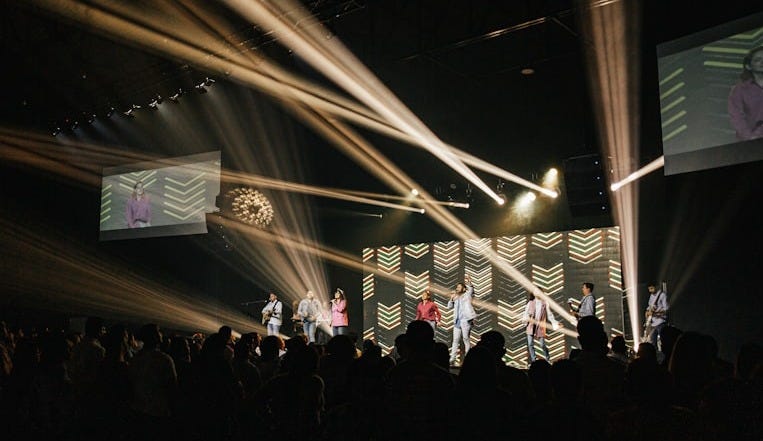
In the Book of Matthew, Chapter 5, Jesus spoke of his followers as “salt” and “light.” Salt was used in ancient times to prevent the decay of food and light is obviously what enables us to see in darkness. Jesus then said we were to be a “city on a hill” – meaning a position that was highly visible. Jesus wanted to get the “salt out of the saltshaker,” with His followers preventing societal decay, being known for their good works, and shining light to the lost.
Jesus also talked about how the Holy Spirit would come and empower His disciples to be witnesses to their city, region, and even the whole earth. When the Holy Spirit was finally poured out in the Book of Acts, Chapter 2, we see that the Apostles devoted themselves to spiritual ministry, while the rest of the leaders and the broader Church body generously ministered to each other’s spiritual, physical, and relational needs. The early church began to meet frequently in the temple and house to house to fellowship, engage in spiritual devotions, share meals, and even donate their possessions! The Bible says this resulted in the “good favor of all the people” and that the Lord added daily to their numbers. The thriving life of the Church went beyond homes and the temple, however. The Book of Acts gives us many stories of worship and ministry taking place in the streets, city council meetings, and even in jail! Just like Jesus wanted, His Church was growing, highly visible, and becoming known for good works, all while still shining the light of spiritual redemption to the lost.
Unfortunately, the growth and impact of many Church organizations in our modern times has stagnated, with leaders often unsure of how to improve things further. Most of the formal and intentional activity of the Church takes place twice a week within a building at a centralized location. Worship and ministry activities are considerably less present in the home, and many of us actively feel uncomfortable with thoughts of bringing our “religion” out into the streets.
To be clear, the “temple” is wonderful and needed. Excellence at what happens inside the church building is important! A well-executed song service can facilitate a powerful connection between us and our Creator! A well-crafted sermon can challenge people to think and respond to the Word in ways that will forever change their life! Strong administration is vital when it comes to managing money and remaining accountable. Centralized systems are necessary for coordination and ensuring we remain effective, efficient, and intentional with our resources. Church services can provide a wonderful avenue for people to connect with God. In fact, I believe we need more excellence and innovation in our systems and service flows, not less.
However, if we are not careful, the church building can become a bottleneck to the growth of the body, a crutch that actually inhibits saints from thriving, and a black hole that misallocates our resources. Indeed, with so much of our attention on systems and service flows within “the temple,” we have basically become professionals at worshipping and ministering inside a building. The unintended cost of this, however, is that we have begun to lose our “saltiness” – our ability to engage outside the building. There are several reasons why an over-reliance on the building can actually hinder the growth of the body and stymie our mission.
First, ministering at “the temple” usually lends itself most easily only to certain types of spiritual gifts. For example, Gifts of Exhortation or Teaching find an easy avenue for their expression on the platform, aided by spotlights and microphones. Gifts of Leadership and Administration may also find themselves right at home amongst the centralized systems of the church offices. Those with the Gift of Mercy, on the other hand, may find straight rows of chairs in an auditorium to be a less than ideal location for their ministry to thrive. Similarly, those with the Gift of Evangelism may find few within the building that clearly need it. Someone with a Word of Wisdom may also find crowded lobbies to be an awkward environment for the sensitive and long conversation they need to dig into with another believer. As a result, certain gifts thrive with organizational support, while others wither within the confinement of the church walls.
Second, ministering at the temple only requires certain amounts of gifts. For example, there can only be so many musicians on stage at a time and so many speakers behind the pulpit. Some churches temporarily solve this by implementing a rotation, but this also means that each person is being used less frequently – potentially slowing their growth. Rotations may also only be a limited or short-term solution. For example, a rotation of three regular speakers may be doable, but what about twenty? Some churches will instead plant daughter-works, which is healthy, but does not totally solve for the limitations that will come if the new church also only focuses on activities inside the building. There are simply only so many types and amounts of “cogs in the machine” that are needed at a time. These factors can cause the building to unintentionally become a bottleneck, if it is the only obvious outlet for ministry.
Unfortunately, when only certain parts or functions of the Body are allowed to thrive, others will atrophy and lose their capacity. Much of the Church’s messaging has centered only around the importance of attending services and inviting people to the building. To be clear, this is not entirely wrong! Church attendance is certainly a vital part of a healthy spiritual life. Over time, however, an imbalance in focus may slowly cause the building to become the only environment where many people are accustomed to deeply engaging with their spirituality - causing the building to eventually become a crutch. If we are not careful, we can become better at “having church” than at being the Church. Unfortunately, this problem has progressed to the point where the term “church” itself is now something that is often primarily associated with the idea of a building or organization rather than with a personal, every-day identity.
However, when people subconsciously believe that the Church mainly just consists of “the temple,” the building will, in turn, become the main place where they seek to serve. This dynamic can cause the church building to become like a black hole, sucking in large amounts of time and energy from the most devoted saints, but returning diminishing marginal value. For example, if a church had ten volunteers ready to serve in any capacity, would more impact come by growing the choir from 60 to 70 people or from starting three new home bible studies? Similarly, if some musicians had 10 hours of time to invest, should they use it all at rehearsals learning to play a C#m9 versus “just” a C#m7, or might it be better to spend part of it ministering at a nursing home? If there was $10,000 extra in the budget, would someone’s life be more transformed by upgrading the lighting system, or by helping a family struggling with infertility to adopt a child? In each of these scenarios, the second option returns more marginal value, but the first is what we may default to, if we are too narrowly focused on the Kingdom at the temple.
Of course, these are just over-simplified, hypothetical scenarios. Many churches have the resources to focus in multiple places and “walk and chew gum at the same time.” There are also times where it is entirely appropriate to invest substantially within the church’s building and infrastructure. The point remains, however, that, if we are to reach the world, we must not allow our buildings to become black holes.
To understand more clearly, let’s use a Biblical analogy for the Church — a physical body. To keep our bodies strong, we know that exercise is essential. However, let’s imagine two people that each spend ten hours a week working out. Person 1 spends all ten hours using the bicep curl machine. Person 2, on the other hand, divides their time evenly amongst all the major muscle groups. Although Person 1 is likely to have bigger biceps, it is the second person who you would want to have on your side in a fight – especially if you knew you were going to war.
Investing in getting better at the bicep curl machine is not bad. In fact, it is good and should be continued, but it is not the only system our bodies need to exercise within. We must not get addicted to working on biceps so much that we don’t realize our other muscles are atrophying away. We should imagine a ridiculous image of a bodybuilder who has only worked on biceps every Sunday and Wednesday for decades…not realizing that they no longer have legs. Picture them walking around the gym on their arms, dragging limp legs behind them.
Indeed, as the Church advances the Kingdom of God, we must not be a community that is “all biceps” and only knows how to minister with excellence in the context of centralized church services or large, “stadium-style” events. We are engaged in spiritual warfare already, whether we like it or not, and the enemy isn’t going to just “arm wrestle” us. In order to reach the world, we must adapt our systems and structures to allow for all of the Body of Christ to flourish. Introducing a sustained focus on Church life in the home and out in the streets of our community brings balance to the picture. These both not only open up a far greater number of “slots” for people to fill, but also introduce entirely different sets of gifts they can more easily operate in.
Holding gatherings in our homes radically expands the “footprint” of the Church. Instead of people noticing only one building, the activity in dozens of homes can serve as “billboards” to the community. Many people would gladly accept an invitation to a small gathering, intimate meal, or Bible study before they would just walk into a big building where they don’t know anyone or understand what’s going on. Home gatherings encourage saints to bond and minister to each other in ways that are far more personalized than is possible in corporate meetings. It also offers a low-pressure environment for people to grow in their giftings. Similarly, serving and meeting people out in the community is also important, not just because of the tremendous impact we can have, but also because it keeps us oriented to our mission of reaching the lost instead of “riding the pew.” It also allows us to connect with people where they are instead of waiting for them to come to us. Engaging with people in “real life” settings can make God feel much more accessible than “practicing religion in a building somewhere.”
As an aside, even when we are focused on “biceps” (centralized church services), it is wise to not only use the same “bicep machine” every week (same types of programming and service flows). Exercise experts know that variety in how you train a muscle is important to avoid hitting a plateau – a stagnation in progress despite continued effort. The only thing worse than Page 12 us trading away our “leg muscles” for “strong biceps”, is to hit a plateau and not even get strong biceps either. Unfortunately, this is exactly the situation many modern churches find themselves in – repeating the same service flows every week for decades, yet seeing only modest returns. Implementing more innovation and variety in how we design our gatherings is important for continued growth, although we need to focus on other muscle groups as well.
When we don’t balance our centralized systems with decentralized discipleship, we may also find it difficult to garner genuine feedback about how the church could improve. The setting of an auditorium with rows of chairs simply isn’t designed to easily facilitate vulnerable conversation and feedback. Unfortunately, change can be neglected or even resisted by the Church, due to fear, unclarity, or desire to protect the status-quo. What is needed, however, is for Church leadership to intentionally spend more time building up the Church’s variety of giftings, even if that means making additions or changes to existing ways of doing things.
One important step in this journey is to publicly affirm those who pursue careers in “secular fields” and highlight how their “non-church” positions can be used to mightily advance the Kingdom. In a similar vein, publicly recognizing ministry efforts that are taking place outside the church walls is important. For better or worse, people are pulled towards areas where they feel likely to be seen and affirmed. Ministries that revolve around the church building have a natural “visibility” advantage, and so are more likely to pull people towards them. Intentional efforts by church leadership to counterbalance this can go a long way. Last, but not least, enabling the Church to thrive outside of a centralized building will require an empowerment of the Holy Spirit. This will be discussed more deeply in the next section, but in short, one of the main reasons why we receive the Holy Spirit is so that we can be empowered to be witnesses for Christ. Certainly this can and does happen within a building, but our witnessing sphere was never intended to be limited to an auditorium of other Christians. For leaders and saints that look inward and feel anxiety about shining their light outside the church walls, the Lord can help here too. Walking with Him and honestly bringing our failings into prayer will open a door for His love to cast out all fear. He will assure our timid hearts of His strength and lead us into the perfect positions for His strength to be made perfect in our weakness. It is not our job to save the world – that belongs to Him. Our job is to walk in the Spirit, obey His voice, and speak or act in Love to those He brings us into connection with. He will enable us to reach the world, but He will take care of saving the world.
In summary, to bring life to the world, it is worth reflecting on how we can build a thriving Church presence within the “temple”, our homes, and out in the community. If we are not careful, however, we will continue to rely upon a handful of ministers and religious activities at a building. These can become crutches, bottlenecks, or black holes that misallocate our collective potential for the Kingdom of God. If this happens, we should not be surprised when the growth of many of our communities continues to remain static or decline, with many congregations habitually repeating the same activities every week, using the same people, at the same location, simply because that is always what has been done. The reality, however, is that bringing the life of the Church to the temple, home, and street are all needed, with each offering us new ways to minister to others and strengthening different parts of the Body.
Of course, the spiritual life, including worship, ministry, applying the gifts of the Spirit, should extend outside the walls of the church. God told man to work and keep the garden, which in the eschaton is the whole creation. Church can become a "thing we do" which becomes disconnected from the rest of our life.
As you compare the importance of excellence in what happens in the church building with the risk of it becoming a black hole for attention and resources, I am wondering what your perspective is on the question of what the purpose of the church building is, exactly. This, of course, will influence your perspective on how much attention to church services is too much.
Is church a place where people go to hear the Word and get wisdom? Is it a place where it is advantageous and economical in helping newcomers repent, be baptized, and receive the gift of the Holy Spirit? Is it a place where the faithful gather to be spiritually fed by an intense worship experience? Is it all of these things together? All of these things can happen outside the walls of the church building. Are the purposes of church dynamic and approximate, then?
Is the church building "capital T" Tradition (God commands it, not optional)? Or is it "little t" tradition (it is useful, makes a lot of sense, but strictly speaking an optional practice)? Going by the New Testament alone, we are taught, perhaps, that Christians should gather together regularly to worship (Hebrews 10:25), but it does not prescribe meeting specifically on Sunday.